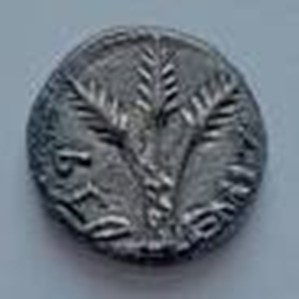
 American investigators returned a rare silver coin to Israel that they say was minted as a marker of independence during the Great Revolt against Roman oppression of 66-73 A.D., and centuries later was looted from an archaeological site in the Valley of Elah.
According to the New York Times, the coin was seized in 2017 when collectors tried to sell it at an auction in Denver, where it was listed as having an estimated value between $500,000 and $1 million. But it did not clear the legal hurdles to be returned to Israel until this summer.
Experts say the coin, a quarter-shekel piece featuring palm branches and a wreath and dated to 69 A.D., is among the rarest coins remaining from the bloody Jewish uprising against imperial Rome. The Roman response included the sacking and burning of the Temple Mount in 70 A.D. and, in 73 A.D., the demise of the last Jewish holdouts at Masada. The minting of such coins by Jews during the rebellion was considered a major statement of sovereignty by people whom the Romans had forbidden from issuing silver coins.
The trail of the coin ultimately led investigators to Denver, where it was listed for sale by Heritage Auctions. Agents with U.S. Homeland Security seized the coin while the sale was underway. Earlier this year, the Israeli government enlisted the help of the Manhattan district attorney’s office to make the case that the coin was provably stolen. The district attorney’s office has a special unit that focuses on antiquities trafficking, and it determined it had jurisdiction because the coin had passed through Kennedy International Airport en route to Denver.
Production of the coins stopped in 70 A.D., the year the temple in Jerusalem was destroyed by the Romans under Titus. Now they serve to provide us with incremental but important information about the ancient society that made them, experts say.
[Photo courtesy Manhattan District Attorney’s office]
Get Social