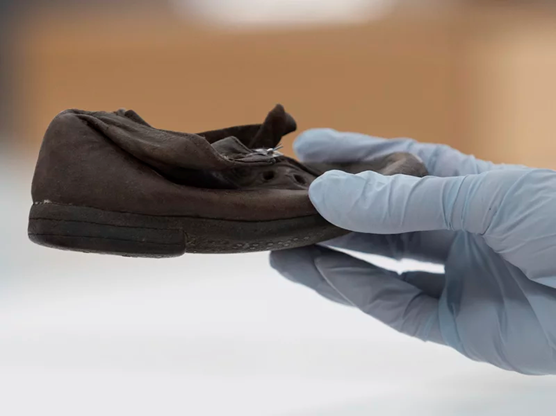
 In a modern conservation laboratory on the grounds of the former Auschwitz-Birkenau death camp in Oswiecim, Poland, a man wearing blue rubber gloves uses a scalpel to scrape away rust from the eyelets of small brown shoes worn by children before they were murdered in gas chambers there. Colleagues at the other end of a long worktable rub away dust and grime, using soft cloths on the leather of the fragile objects. The work is part of a two-year effort launched last month to preserve 8,000 children’s shoes, remnants of the deaths of 1.1 million people during WWII, most of them Jews.
Today, the camp is a memorial and museum managed by the Polish state. The Germans destroyed evidence of their atrocities at Treblinka and other camps, but they failed to do so entirely at the enormous Auschwitz site as they fled the approaching Soviet forces toward the war’s end.
Eight decades later, evidence is fading under the pressure of time. But more than 100,000 shoes of victims remain. Many are warped, their original colors fading, shoe laces disintegrated, yet they endure as testament s of lives brutally cut short.
“Children’s shoes are the most moving objects for me,” said Miroslaw Maciaszezyk, a conservation specialist from the museum’s conservation laboratories. He said that he and the other conservation workers never lose sight of the human tragedy behind the shoes. Sometimes they are overcome by emotion and need breaks.
Get Social