From the Rabbi

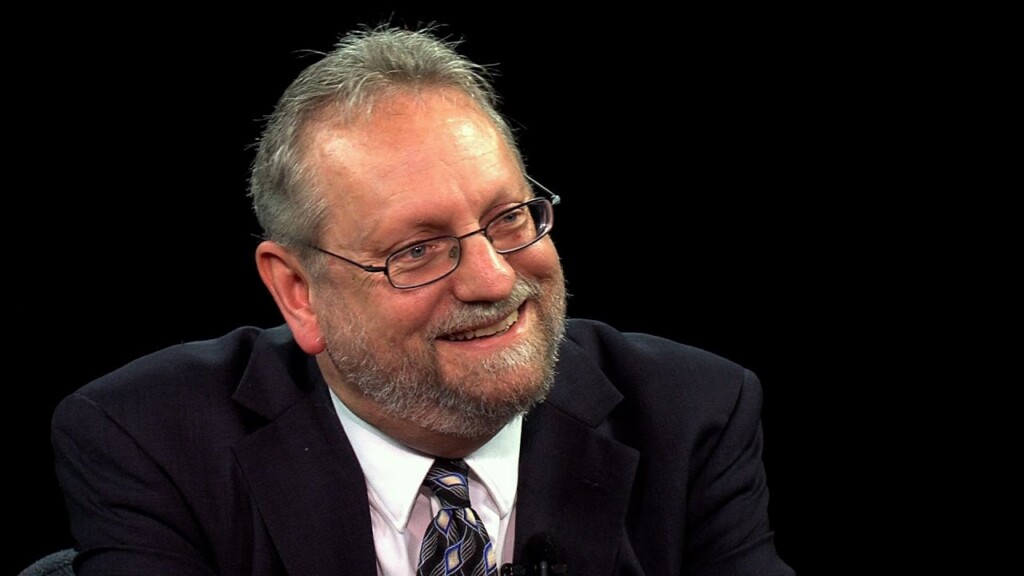
Eulogy For Paul Birman: A Tribute To A Veteran, A Sailor, And A Friend
By Rabbi Gadi Capela
On a sunny day in Pompano Beach, Florida, Monday, November 11, we gathered at the graveside to honor the memory of Paul Birman, A”H, a beloved member and benefactor of Congregation Tifereth Israel, who passed away at the age of 89. His mahogany casket, adorned with the United States Military emblem, was a testament to his service and dedication as a veteran. Fittingly, on Veterans Day, we celebrated Paul’s life, marked by service to his country, his community, and his family, particularly as caregiver to his first wife, Rosemarie, during her long illness. In his later years, Paul continued to give of himself, enriching the lives of those around him.
Paul was also an adventurer, a sailor, and a world traveler. He journeyed across Europe and Japan countless times, but always cherished the comfort of home. His connection to the North Fork began while sailing along the Long Island Sound to Orient, a place he came to treasure deeply. In all his endeavors, Paul found meaning in tradition, prayer, and the community he loved.
Paul was born and raised in the Cunningham Park section of Queens, where he pursued many interests. Then, as a proud MIT graduate and electrical engineer, Paul’s passions focused on technology and communication. He was an avid member of the ham radio club, and his love for innovation extended to our synagogue, where he was instrumental in establishing and maintaining CTI’s first website over a decade ago. Together with his wife Pamela, he continued to champion the integration of technology into synagogue life, modernizing and expanding our digital presence. In 2015, Paul and Pamela generously endowed the Paul S. Birman Technology Fund. Their gift supported Jewish education, interfaith relationships, and accessibility for members near and far, extending CTI’s reach beyond the East End of Long Island.
Paul was a long-time member of the synagogue’s Board of Directors, and served several terms as vice president. In 2018, Paul and Pamela were honored at the annual Journal Dinner-Dance, a testament to their enduring impact on CTI. Paul’s legacy is one of generosity, vision, and service, and his memory will forever inspire us to pursue growth and connection.
May Paul’s memory be for a blessing. Yishar Koach to all who carry forward his legacy.
“A Celebration of Color, Texture, and…Women”
Every time Roberta Garris produces a quilt for one of our silent auctions, I can’t resist bidding on it. Her colorful tapestries now brighten several rooms in my house. When she announced that her “A Year in Patches” quilt was accepted into the prestigious International Quilt Festival in Houston this year, I knew I had to join her. Her “Weather” quilt features 365 squares, each square representing a day in a year in Greenport, its temperature and level of precipitation. Roberta is not only a talented fiber artist but also a dedicated member and supporter of our community. Supporting her in this proud moment felt natural. Roberta shared that the festival draws around 40,000 visitors, making it the largest of its kind in the world.
The festival was a stunning display of creativity — painting in fabric. It was a celebration of colors, textures, and, overwhelmingly, women. As one of only a handful of men attending, this phenomenon was particularly vivid to me. In fact, the attendees were strikingly uniform: 99% women, 99% white, and mostly between the ages of 50 and 80. I felt as though I had stepped into a unique slice of Americana. Later, I learned its origin. Quilting began as a craft tied to women’s roles in the home. In a time when women were expected to focus on household management, quilting became a way to express creativity while prudently saving and reusing scraps. It’s no wonder that quilting has remained “woman’s turf.” In its current form, quilting had its revival in the 1970s and ‘80s.
Later that weekend, I attended an event at the largest synagogue in America — a grand building resembling a mega-church, complete with a three-story Aron Kodesh. On that day, the featured speaker was Noa Tishby, a passionate pro-Israel activist, her appearance drawing a vibrant gathering of 1,500 American Jews. There, I observed a contrast to the largely-white quilting crowd, reminding me of the rich diversity within the Jewish people. Like quilting, this, too, was a tapestry — a tapestry of people who were “off-white,” as Karen Brodkin describes us in her 1998 book How Jews Became White Folks.
The magnificent celebration of colors and textures at the events also served as a sanctuary in the midst of the election season. The artwork represented diverse themes in American society, history, and folklore — no arguments or tension, just interwoven stories. Let this be an inspiration for us as we sit around the Thanksgiving table this year. America weaves a narrative of many threads that form our collective story.
Happy Thanksgiving. Happy Hanukkah. And blessings for the New Year.


—Rabbi Gadi Capela (text and photos)
“Days of Repentance”
This year, the High Holidays truly felt like a time of reflection and repentance. As we celebrated Simchat Torah, the final event that concludes this month of observance, Israel conducted an historic airstrike against Iranian military targets on its own soil and named it “Days of Repentance” — an action that, in previous years, would have seemed an unimaginable undertaking, one with the potential to ignite a world war, possibly even a nuclear conflict. This significant event took place on the anniversary of Simchat Torah when, just a year ago, Israel’s joyous celebration was overshadowed by tragedy.
This whole year, we found ourselves asking where we went wrong, and where we could seek teshuva. The past year has indeed been one of teshuva — a full 365 days dedicated to reflection. And given that this was a leap year, with the addition of an extra month, we have experienced 386 days pregnant with complex emotions: guilt, remorse and sadness, but also courage, love and solidarity.
During the Days of Awe, we recite the words, praying that teshuva and tzedakah may avert harsh judgment. Looking back at where we were last year and where we are this year, Israel is prevailing. So, what shifted our circumstances and led to a more favorable outcome after a year? Is it solely the strength of Israel’s military or the sophistication of the operations? After all, those capabilities existed even before October 7, 2023.
Perhaps what helped things turn around were love and solidarity. The two sides within Israel that once were at odds, demonstrating on the streets of Tel Aviv and Jerusalem, realized that they had to fight much worse common enemies — Hamas and Hezbollah — and strive for a much higher common value. A minute before they both slipped off the precipice, they engaged in teshuvah. They chose not to escalate their conflict into a civil war, known in Hebrew as Milchemet Achim — a war of brothers. This act of unity represented the ultimate form of repentance — a combination of prayer, teshuva, and tzedakah in one meaningful gesture. When God witnessed this, He chose to alter our fortunes.
During these days of repentance, we should reflect also in the context of America. We are approaching a tense and consequential election. In the days leading up to the national election, let us consider the path before us. Are we prepared to engage in a brotherly conflict, or will we choose a different route, fostering understanding and collaboration instead?
The strength of America, like that of Israel, resides not only in its military power, natural resources, or geographical vastness. Strength resides primarily in America’s people and their commitment to coexist harmoniously with those who are different or those who hold opposing views. We face a similar choice: Will we allow ourselves to be drawn into a conflict with our national siblings, or will we opt for unity and let God bless us in ways we cannot yet imagine?
It was wonderful to see all those who celebrated with us this month. May God bless us with a peaceful year.
—Rabbi Gadi Capela
Get Social