From the Rabbi

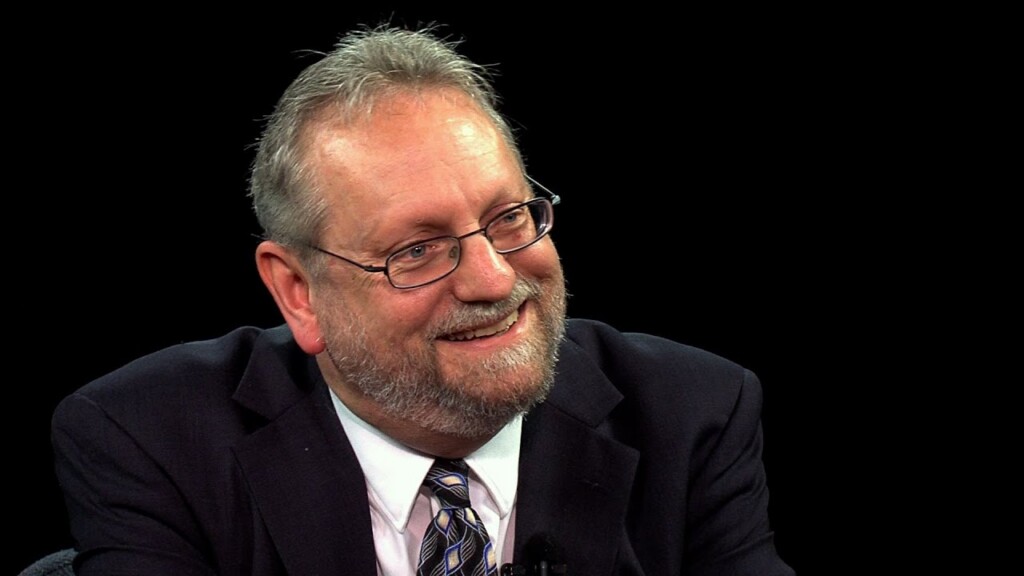
Rabbi Robert L. Wolkoff
Previous Messages
Friday Night Services & a Special Reflection from Rabbi Wolkoff
“Ten Days of Teshuvah – Return, Repentance and Renewal”
“Israel: A Deeper Awareness”
The rabbis tell us that the air of the Land of Israel makes us wise. That might be a little too much to assert, but I can say with great certainty that the air of the Land of Israel makes you aware.
As of this writing, I am in Israel visiting my daughter Dahlia. She is doing her national service in a Magen David Adom ambulance as a new olah, a recent immigrant who literally “went up” to the Land. My awareness has grown more than I can even begin to tell you. Much of what I have learned has been tremendously positive and inspiring, for instance, do you know that half a billion (with a b) birds migrate annually through Israel. That’s over a million birds per day. These include, miraculously, cranes and storks that rise on thermals in an elaborate spiral dance. I was privileged to witness this for only the second time in my life. Magnificent.
In another area entirely, a whole section of Tel Aviv, called Florentin, is simply overflowing with murals and graffiti — beautiful, thought provoking, heartfelt, and touching. I’ll be bringing home pictures, but one line I’ll share with you now: “You think I feel too much. I think you feel too little.”
The prophetic spirit of Judaism lives on.
Some of what I learned was inspiring, but also tragic. Gut-wrenching. Our family friends have a nephew who lost a leg in Lebanon. But he was nurtured back to health by an inspiring organization that works with military amputees. This organization helps them retain their perspective as respected dedicated warriors, not rejected invalids. It is as powerfully life-affirming as anything I have ever experienced.
All that, and more, comes to mind as I prepare to return to the United States and the whole heated anti-Semitic/anti-Zionist rhetorical swamp. Having seen those wounded warriors, who gave if not life, limb, in defense of our people, my contempt has only grown for those who arrogantly introduce their criticism of Israel with the words, “As a Jeeewwwww…” as if an accident of birth puts the opinionated as-a-Jew, however passionate, on the same level as those who offer “mesirat nefesh” — the turning over of their souls to defend innocent life. Now, to be sure, everyone has the right to his or her opinion. But not all opinions deserve the same respect. And those whose lives are on the line deserve more respect than we can even give. They are, moreover, a source of tremendous hope for the future. The people of Israel do indeed live.
B’shalom,
—Rabbi Robert L.Wolkoff
“A Tour of the Divine Palace”
The Baal Shem Tov, the 18th-century spiritual master who founded the Chasidic movement, once recited the following parable: Two men went to the royal palace to see the king. At the entrance, they were informed that the king was not holding court that day. One left immediately, but the other asked permission to visit the palace, and view its beautiful paintings and works of art.
This, explained the Baal Shem Tov, is very similar to our relationship with G-d and the Torah. Within each of us is a seeker, someone who longs for contact with the Divine. We seek to enter the palace. But we experience that the Divine King is not holding court today. We don’t seem to have the facility to march right into the Divine King’s chambers. Indeed, the fact that the Baal Shem Tov felt it necessary to tell this story to his followers seems to indicate that even back then, our ancestors had the same problems that we do. Or, as the saying goes, “We’re not as spiritual as we used to be, but then again, we never were!”
In any case, those who have immediate access to the Divine are few and far between. The crucial issue is, what do we do when we find our way to the Divine King blocked? Do we just walk away? All too often, the answer is yes. I know a camera buff who once showed me one of his new cameras that loads the film for you, adjusts the light, focuses the lens, adjusts the F-stop, and on and on. It wouldn’t have surprised me if the thing could cook dinner for you. And my camera buff friend said, “If they can make cameras this easy, they could make Judaism this easy.” And since they didn’t (whoever “they” are), he had basically turned his back on our tradition.
But, of course, there’s a difference. The camera with all the bells and whistles can do just about everything — except make you a great photographer. For that, you need inspiration. And inspiration comes from G-d. In other words, what Judaism offers begins where the camera’s contribution ends.
But we’ll never get to experience that inspiration if we just walk away from the palace. We need to take advantage of those Divine wonders and masterpieces that grace the palace, even if we don’t get to see the King himself. And in Judaism, one place where those Divine wonders and masterpieces are found is in study, in the enrichment of our mind, and with it the possibility of enriching the entire environment in which we live.
Now that all the major fall holidays are behind us, we can focus on a wider range of study and explore those wonders and masterpieces. Here’s a sample of what we hope to experience:
A series of Friday night/Erev Shabbat speakers, including discussions of the deer overpopulation and attendant problems (ticks, environmental damage); and fishing and the state of the waters around us; as well as readings from various dramatic works in progress.
Readings from the spiritual autobiography I have been working on.
Informal “Ask the Rabbi” discussions, hopefully in people’s homes (if you would like to host, let me know). We can also do “Judaism A-Z” sessions on a particular topic, chosen by the hosts.
A “Parsha and Poetry” class where we look at biblical passages through the lens of poetic expression. Here’s a favorite example, a take on the E-l maley rachamim prayer for the dead, from the great Israeli poet Yehudah Amichai: “G-d Who is full of mercy — if You weren’t so full of mercy, maybe there would be some mercy here on earth.”
And finally, as of yet only on my wish list, a course on Art and the Bible, looking at the Bible through the lens of visual artists, from Michelangelo and Rembrandt to Barnett Newman, George Segal, and Judy Chicago, and perhaps even some insights from our many wonderful in-house artists.
All of the above lead us on a tour of the Divine palace, and it’s such a delight to take it together!
B’shalom, —Rabbi Robert L.Wolkoff
To make an appointment with Rabbi Wolkoff, call 732-570-7634
Friday Night Services & a Special Reflection from Rabbi Wolkoff
Join Us This Friday Night
For several years, Rabbi Wolkoff has been trying to make sense of the path on which G-d has led him. The result is a spiritual autobiography in which Rabbi Wolkoff shares the spiritual lessons he has learned through life experience.
You heard one example on Yom Kippur, when Rabbi Wolkoff shared the spiritual lesson he derived from the death of his mother, z”l.
This Friday night, Rabbi Wolkoff will share another story—the title story from the book:
“The Peculiar Compassion of G-d; or Why Did G-d Create Sand Gnats?”
We invite you to join us for Friday night services at 7:30 p.m.,
with Rabbi Wolkoff’s story to follow at approximately 8:30 p.m.
We hope you will join us for this special evening of prayer, reflection, and storytelling.
Get Social