Season 4 Of ‘Fauda,’ The Hit Israeli Series, Will Debut Jan. 20 On Netflix
Netflix has announced that Season 4 of “Fauda,” the hit Israeli thriller, will debut on the platform on Jan. 20. “Fauda,” which means chaos, is an Israeli television series developed by Lior Raz and Avi Issacharoff, drawing on their experiences in the Israel Defense Forces.
The series premiered on Feb. 15, 2015. It tells the story of Doron, a commander in the Mista’arvim unit, and his team.
Hanukkah at the White House
 The President and first lady host a Hanukkah holiday reception in the Grand Foyer of the White House. At right is Rabbi Charlie Cytron-Walker, survivor of the hostage standoff at a Colleyville, Texas, synagogue. AP Photo/Walsh
Just When You Thought It Was Safe Outside…News From The WMO
The WMO? What’s that? The WMO is the World Meteorological Organization, and it is this venerable group that assigns names to all the storms that occur in the Atlantic Basin in the coming year. As the 2022 storm season officially closed on Nov. 30, the WMO has lost not a second in stepping up to announce the names of the 2023 storms. As it is now officially 2023, The Shofar also is responding quickly and responsibly, keeping its readership informed and prepared for possible chaos ahead.
To that end, find here the names of the 2023 storms, arrival time and intensity not known at this time, but anyone expecting the arrival of a baby in 2023 might want to avoid the following names for fear of much teasing. Those named Sandy continue to suffer the consequences of the destructive 2012 storm.
Here goes: Arlene, Bret, Cindy, Don, Emily, Franklin, Gert, Harold, Idalia, Jose, Katia, Lee, Margot, Nigel, Ophelia, Philippe, Rina, Sean, Tammy, Vince, Whitney. Should more names be needed, you can be sure the WMO will be up to the job.
About 100 Ukrainian refugees made Aliyah in Israel during Hanukkah
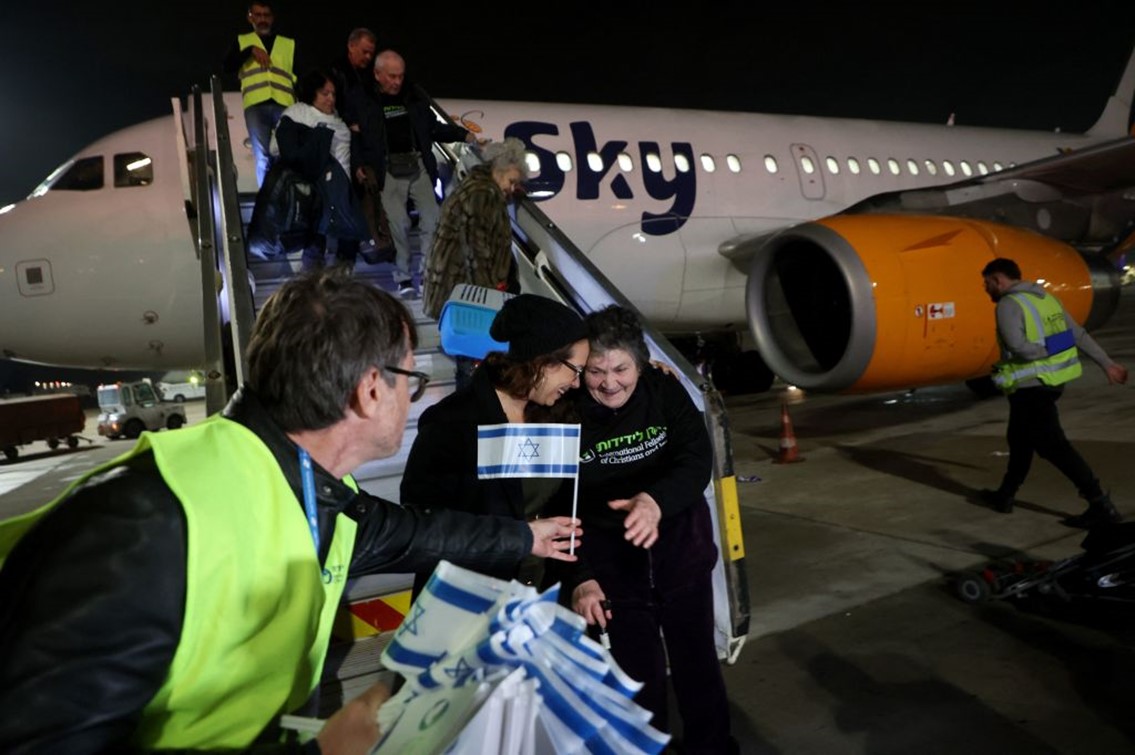 About 100 Ukrainian refugees made Aliyah in Israel during Hanukkah.
“Even while these newest Israelis have had lives defined by pain and suffering for almost the entire past year, it is inspiring to see how they are so filled with hope,” said Yael Eksteen, president of the International Fellowship of Christians and Jews, one of the groups that helped organize the flight.
RNS photo
Season 2 of ‘My Unorthodox Life’ To Debut On Netflix On Dec. 2
For those who binge-watched the first season of “My Unorthodox Life,” the reality TV show about former Orthodox fashion mogul Julia Haart, more drama is on the way. Season 2 of the popular show will arrive on Netflix on Dec. 2.
And if the pre-debut announcements are to be believed, a ton of changes have taken place since Season 1 premiered in July 2021: Several divorces, the firing of a CEO, alleged abuse, hanky-panky with company finances, fraud, new relationships, new marriages, and a mega-real estate offering. Oy vey, what next?
Yu Aw synagogue
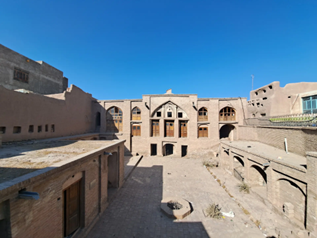 Conservation work to save a structurally fragile, historic synagogue in Herat, western Afghanistan, is set to begin with the backing of the Taliban government. Yu Aw synagogue, located in the Momandha quarter of Herat’s old city, will undergo a 16-month restoration project to save it from possible collapse, local officials and the organization responsible for carrying out the works have confirmed.
The project, which includes restoration of the mikvah, known as Hammam-e Mosaie, is one of the first cultural conservation projects to get the go-ahead in the province since the Taliban formed a government in Afghanistan in 2021, after the withdrawal of US troops from the country.
The Jewish community departed Herat in the 1970s, and the structures that once stood as the symbol of their vibrant life in the city were left abandoned. Not long after their immigration to Israel and the U.S., Herat was faced with decades of war, looting and destruction, which took their toll on the city’s historic monuments, many from its days as the capital of the medieval Timurid Empire (14th-15th century).
The Yu Aw synagogue, a 19th-century structure, the mikvah, a cemetery, and three other synagogues from the same era, are some of the last remaining physical reminders of the presence of Jewish residents in Herat.
Photo: The Yu Aw synagogue. Directly opposite is what was once the main prayer hall. On the right side are steps that lead to an underground mikveh. Photo by Sarvy Geranpayeh
Group Of Conservative Rabbis Gathers To Support Reproductive Rights
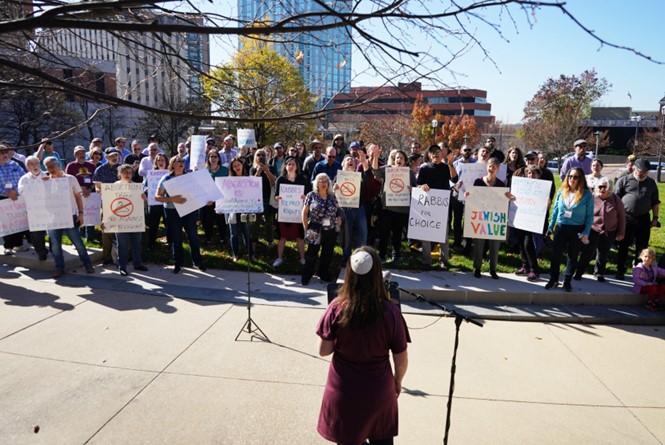 A hundred rabbis gathered to rally for reproductive rights on Nov. 9, 2022, in St. Louis’ Memorial Park Plaza. The rabbis were part of the Conservative movement’s Rabbinical Assembly. Photo/Rabbinical Assembly
Get Social