Tree of Life Synagogue in Pittsburgh New Design Plan
 Rendering of architect Daniel Libeskind’s design for the Tree of Life Synagogue in Pittsburgh, the site of the deadliest antisemitic attack in U.S. history. On Oct. 27, 2018, a gunman entered the synagogue and opened fire, killing 11 congregants and wounding 6 others. The new design plan was revealed by Lifang Vision Technology.
Popular TV Series ‘My Unorthodox Life’ Released As A Memoir
For those interested, an entire genre of storytelling about leaving insular religious communities exists. Only a few years ago, Tara Westover’s knockout bestseller, Educated, told of her escape from her fundamentalist Mormon family in rural Idaho.
In the Jewish world, a spate of stories about leaving various threads of the Orthodox religious world caught fire first with Deborah Feldman’s memoir in 2012, Unorthodox: The Scandalous Rejection of My Hasidic Roots, which later became a Netflix miniseries. In 2017, Tova Mirvis published The Book of Separation in which she wrote about abandoning her marriage and her Modern Orthodox faith.
Julia Haart’s new memoir, Brazen, is the latest. Her rejection of her Haredi enclave and her meteoric rise to the elite world of fashion was partly captured in the Netflix reality TV show, “My Unorthodox Life.
Calling All Singers: The Shul Is Planning A Music Project; Fun Ahead
 Are you musical? Can you sing, carry a tune? The shul wants you. How would you like to learn new tunes for the Friday night service? Lend your voice to enrich our Shabbat service? Join our Training Meet-Up, headed by shul member Chuck Simon, who will teach participants on Zoom or in-person this summer.
This is your opportunity to learn new skills and share in building a musical community in our shul. Ability to read Hebrew not required.
Email ctigreenport@gmail.com with your name and contact information for a fun musical summer.
An Artifact May Spur Debate On Dating Of Biblical Events In Exodus
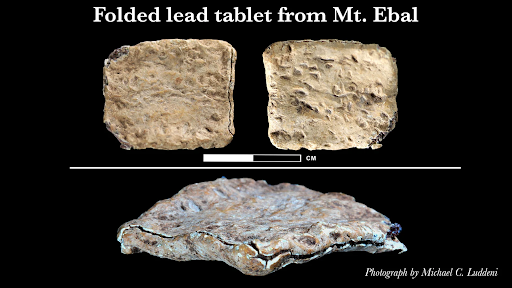 An ancient tablet discovered near the Palestinian city of Nablus may contain the earliest known mention of God’s name in proto-alphabetic Hebrew. Scott Stripling, director of the Archaeological Studies Institute at The Bible Seminary in Katy, Tx, announced the discovery of the lead tablet. He said it could push back the written record of the name “Yahweh” a couple of centuries earlier, to at least 1200 B.C. and perhaps as early as 1400 B.C. The finding may also spur renewed debate on the dating of biblical events, especially those told in the Book of Exodus. A peer-reviewed article is in progress.
The artifact, less than one inch in length and width, is known as a curse tablet, from the Late Bronze Age. The inscription reads: “Cursed, cursed, cursed — cursed by the God YHW. Cursed you will surely die. Cursed by YHW — cursed, curse, cursed.” In making the announcement, Stripling was joined by Museum of the Bible CEO Harry Hargrave, who noted, “This little artifact helps us understand better the history, story, and impact of the Bible — all within one square inch.”
May Is Jewish American Heritage Month. What Does That Mean?
 In 2006, following resolutions passed by the U.S. House of Representatives and the Senate, President George W. Bush proclaimed May to be Jewish American Heritage Month. Each year since then, the sitting president has upheld the declaration.
Jewish American Heritage Month focuses on the contributions of Jewish people to this country throughout its history of nearly 250 years. This month, we also look at the history of injustice around the world. It is a time to reflect on rising antisemitism in this country and abroad. It is a time to be proud of our heritage and to assure that Jewish communities will flourish, as President Bush intended.
Scholarship Opportunities In The Arts
North Fork Reform Synagogue has announced the awarding of the second annual Linda Rie Cohen Scholarships, a $10,000 endowment from Fred Cohen to honor the memory of his late wife, who died in June 2013. The scholarships are awarded to candidates seeking to pursue education in the arts and sciences, in keeping with Linda Rie Cohen’s lifelong passion for music, the arts, and education.
Applications are posted on the synagogue’s website, northforkreformsynagogue.org, and must be received by May 15, 2022.
Jewish Museum In Philadelphia Exhibits Chair From Colleyville Shul
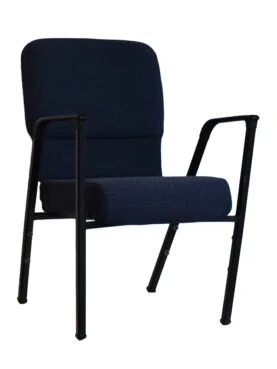 Perhaps no event is more indelibly marked in U.S. Jewish life this year than the Jan. 15 hostage-taking at Congregation Beth Israel in Colleyville, TX. Two items from that day will be displayed at the Weitzman National Museum of American Jewish History in Philadelphia.
Rabbi Charlie Cytron-Walker had welcomed a 44-year-old British national into the synagogue shortly before Shabbat services and offered him a cup of tea. Midway through the service, the visitor pulled out a gun and took Cytron-Walker and three others hostage. After a nearly 11-hour standoff, Cytron-Walker threw a chair at the hostage-taker, distracting him and allowing an escape.
Both the teacup and the chair are now at the Philadelphia museum, where they will be exhibited alongside a video recorded with the rabbi and the other hostages as part of a broader exhibit titled “The Future Will Follow the Past,” that will include events over the last two years within the American Jewish community, including political polarization and antisemitism.
The exhibit will open in May, coinciding with Jewish American Heritage Month
Get Social