Jewish Leaders In Limerick Celebrate Gift Of Four Torah Scrolls
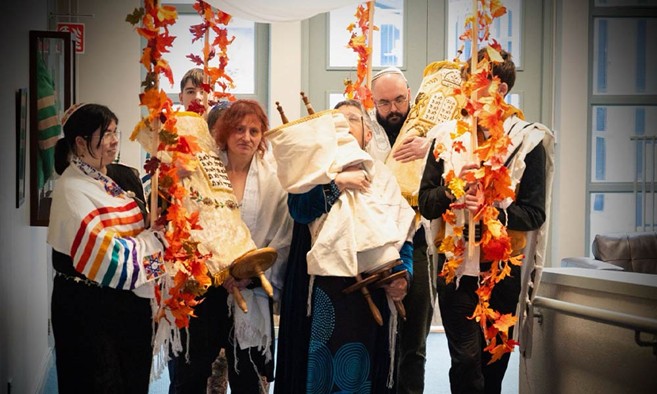 The corridors of Limerick’s Istabraq Hall rang out with the sounds of Hebrew prayer on a recent Shabbat to celebrate the gift of four Torah scrolls, which will serve the Irish Jewish communities outside of Dublin. The scrolls, gifted by Congregation Temple Emanu-El in Haverhill, MA, have their own extensive history: three were scribed in Eastern Europe before the Holocaust, and the fourth in Israel in the 1950s. The Temple is merging with another congregation, and is passing its scrolls to others. Photo by Jewish World
Yiddish Street Signs Debut In Berlin; Yiddish Script With Explanations
On March 11, permanent street markers were installed in the Scheunenviertel (Barn Quarter) to mark the approximately 50 years when Yiddish was the main language there.
At the end of the 19th century, many Eastern European Jews, planning to emigrate to North America, got stuck in Berlin, trying to collect enough money or get papers for their ship journey. As a result, the area, and especially the Grenadierstrafe, became a bustling Jewish street, with many informal prayer spaces, kosher butchers and bakeries and Jewish bookstores.
The new street name signs appear in Yiddish script with explanations and QR codes. The project was initiated by the artist Sebestyén Fiumei.
A Shooting and Vehicle-Ramming Attack At A Michigan Synagogue
On March 12, a shooting and vehicle-ramming attack occurred at Temple Israel, a Reform synagogue in West Bloomfield Township, Michigan. A male suspect rammed his pickup truck into the front entrance of the synagogue, drove through the doors and down the hall, and reportedly opened fire. Police said that the suspect was killed in an exchange of fire with armed security personnel.
The vehicle caught fire, possibly from something flammable inside. One security guard was struck and injured by the vehicle; at least 30 law enforcement officers were transported to area hospitals and treated for smoke inhalation. No synagogue members were injured. Michigan State Police warned of an active shooter, and nearby residents and schools sheltered-in-place.
Ran Gvili, The Last Hostage Returned From Gaza, Welcomed Home
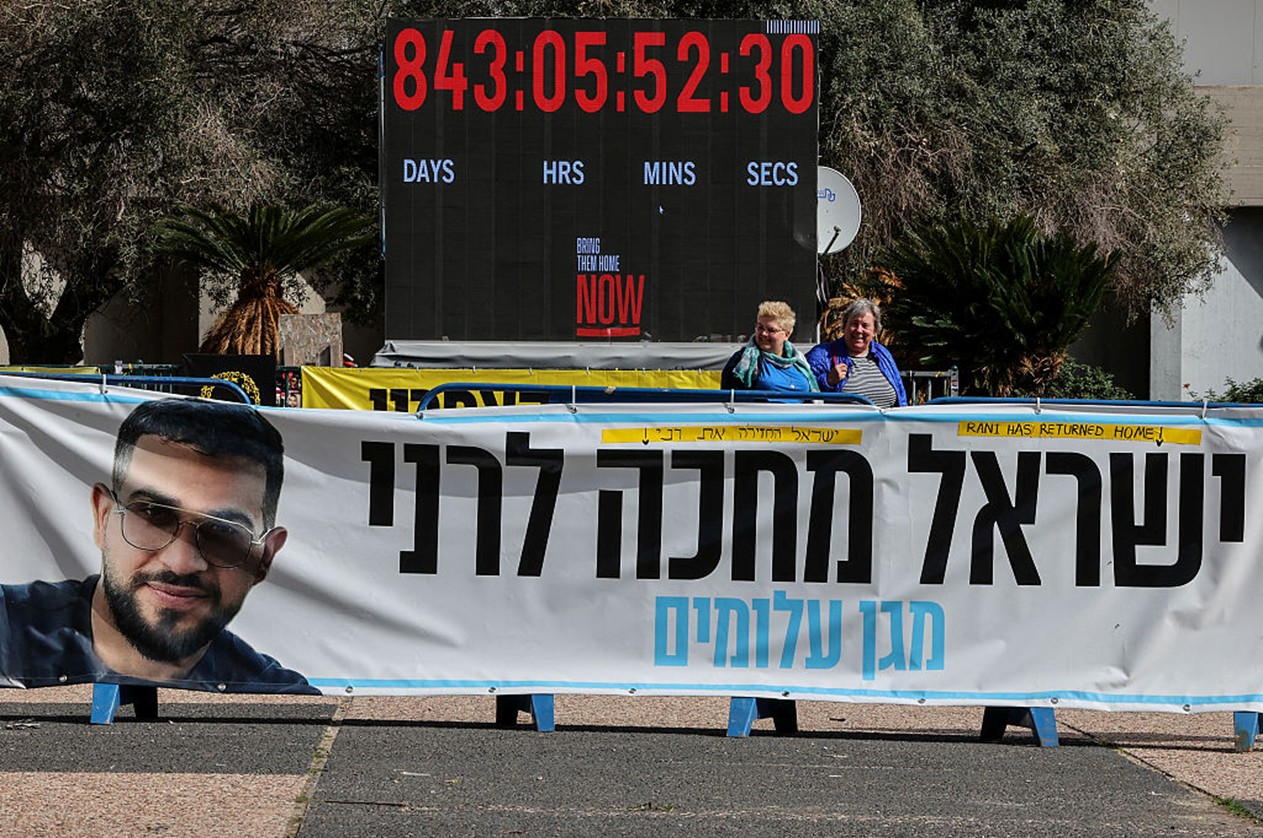
The body of Master Sgt. Ran Gvili, the last Israeli still unaccounted for after the Oct. 7 Hamas attack, was returned from Gaza, ending more than two years of waiting. Gvili, a 24-year-old police officer killed while defending Kibbutz Alumum, was brought home for burial 843 days after he was taken captive.
“The first to go, the last to leave,” his mother posted on Facebook. “Our hero.”
Israel is now expected to reopen the Rafah crossing, Gaza’s border with Egypt and its key outlet to the outside world, the next phase of the ceasefire.
A banner of Ran Gvili is seen at Hostage Square in Tel Aviv.
Photo Jack Guez/AFP Getty I Images.
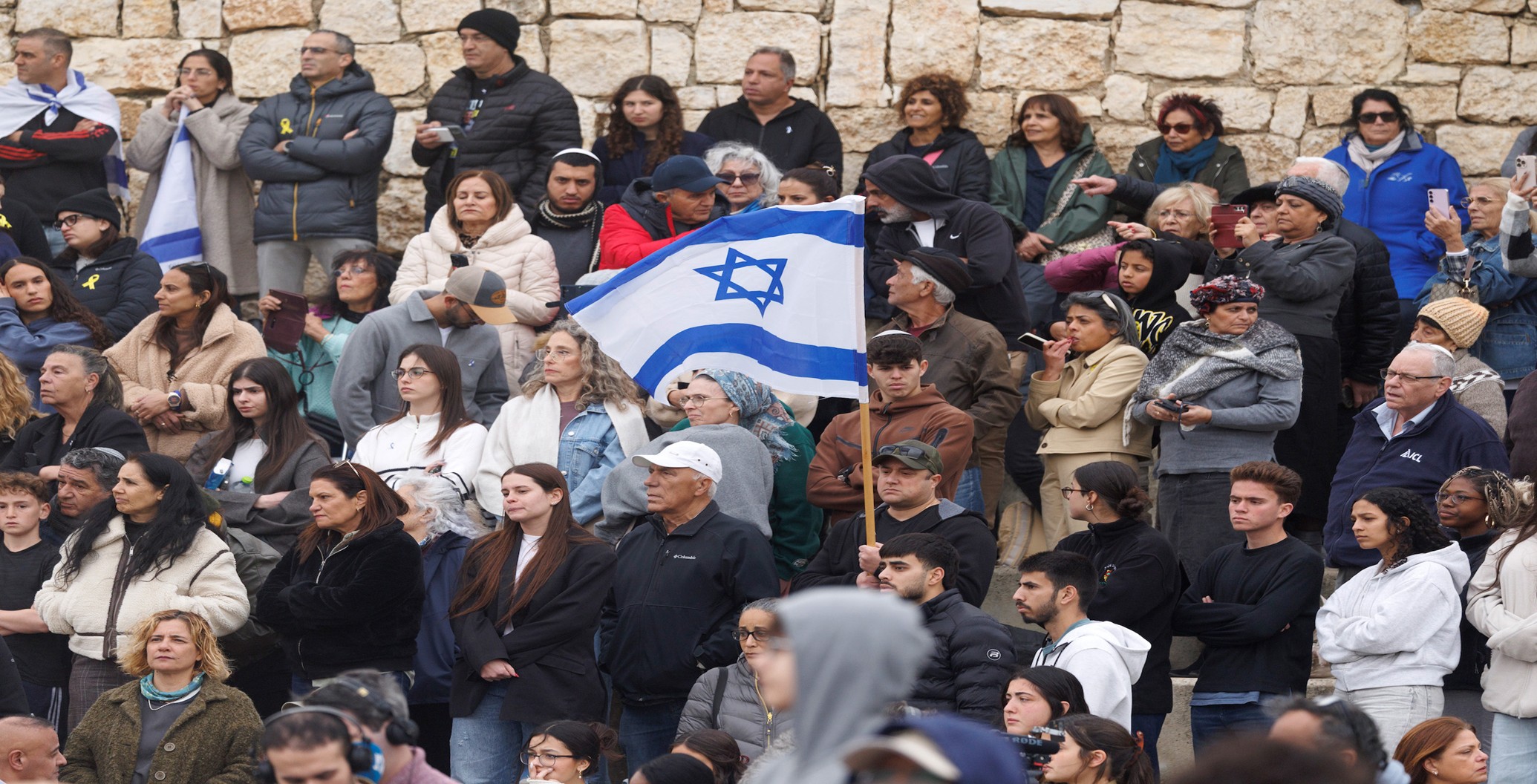
Hundreds of mourners attended the funeral of Ran Gvili. Kobi Wolf/Getty Images photo
I Sing Better In Hebrew Than In English. What’s That All About?
“Twenty years ago this week, I celebrated my bat mitzvah in Denver,” Talya Zax wrote recently in The Forward. Afterward, my voice teacher gave me some puzzling feedback on the ceremony. I sang much better in Hebrew than I ever had in English, she said.
Since my turn as a teenage Torah-chanter, others have occasionally complimented my voice — but only when I sing in Hebrew. I’ve been approached after performing an aliyah during High Holiday services, but my efforts at karaoke tend to leave a room cold. (Then again, my toddler nephew seems to like my way with “Old MacDonald Had A Farm.”)
“The human singing mechanism organizes itself for expression,” said Nicholas Perna, director of vocal pedagogy at the University of Colorado, Boulder. Singers will give their best performances with material that means something to them, not just because the audience can feel their emotion, but because the emotion actually physically changes the way in which the voice produces notes. So, my Hebrew voice reflects meaningfulness.
My most treasured memories of Jewish practice are all about singing. I learned the melodies I sang at my bat mitzvah not from a rabbi or cantor — the small, lay-led shul in which I grew up had neither — but rather from listening to the whole congregation singing around me. I can still hear some of their voices, all these years later, when I think about certain prayers. A mystical tenor guiding Kol Nidre; a single soprano lilting high above “Eitz Chaim”; my father’s firm baritone mixing with my own mezzosoprano.
The understanding that depth of feeling governs vocal quality dates back millennia, Perna told me. “The earliest form of music was probably this sort of tribal and/or religious organized voicing,” he said. “Think of King David’s instruction in the Psalms: ‘Give a joyful shout to the Lord.’ Is that scripture, or is that singing instruction?”
Also, I have never considered singing in Hebrew to be a performance. It’s prayer, an experience of communal closeness. Which might explain why “Old MacDonald” is such a hit with my nephew. When you sing with love — for a community, a child, or a whole faith tradition — you sing with beauty.
Excerpted from an article by Talya Vax, opinion editor of The Forward
Jews Voice Opposition To Immigration Policy’s Mass Deportations
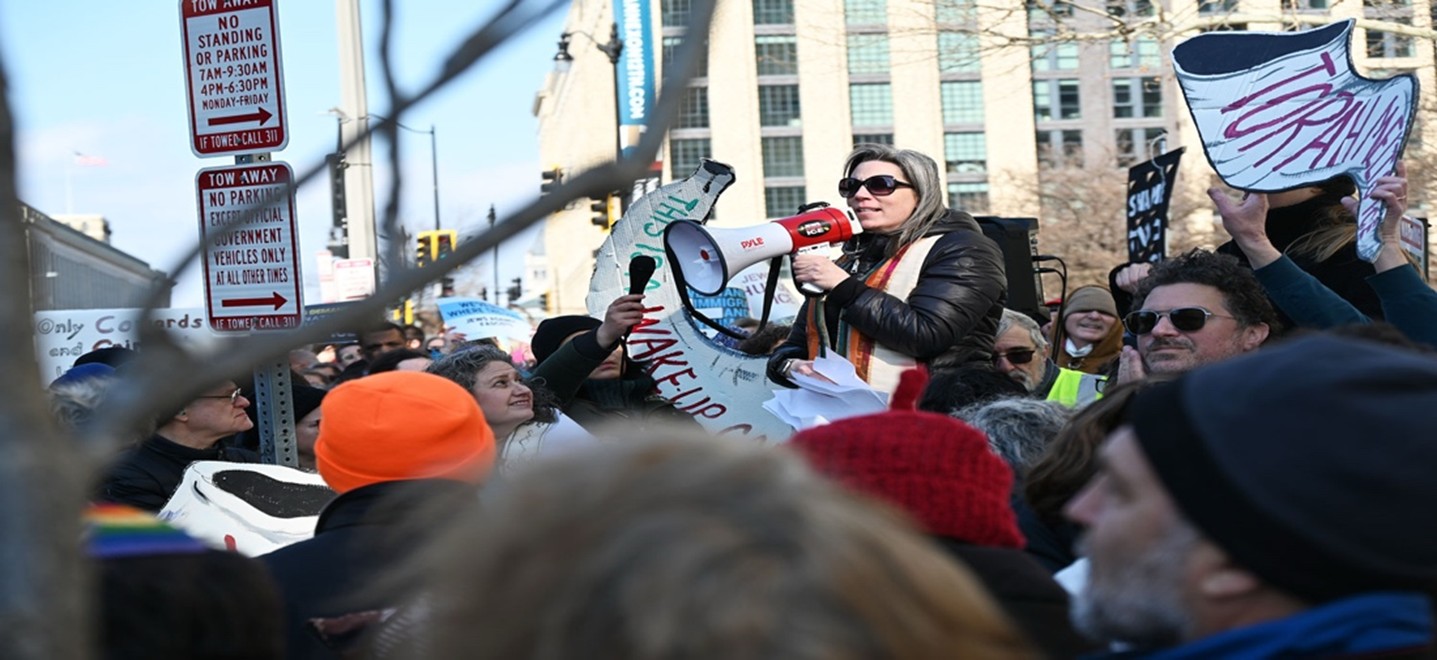
Hundreds of rabbis, cantors and other Jewish demonstrators gathered outside the headquarters of U.S. Immigration and Customs Enforcement on Feb. 11 to voice opposition to the agency’s role in ongoing mass deportations. Pictured, Rabbi Sharon Kleinbaum addressed the crowd, which stretched down the street. “We know it from history, and we know it from God, what is demanded of us in this moment,” she said.
Last Israeli Hostage From Oct. 7 Attack Is Returned From Gaza
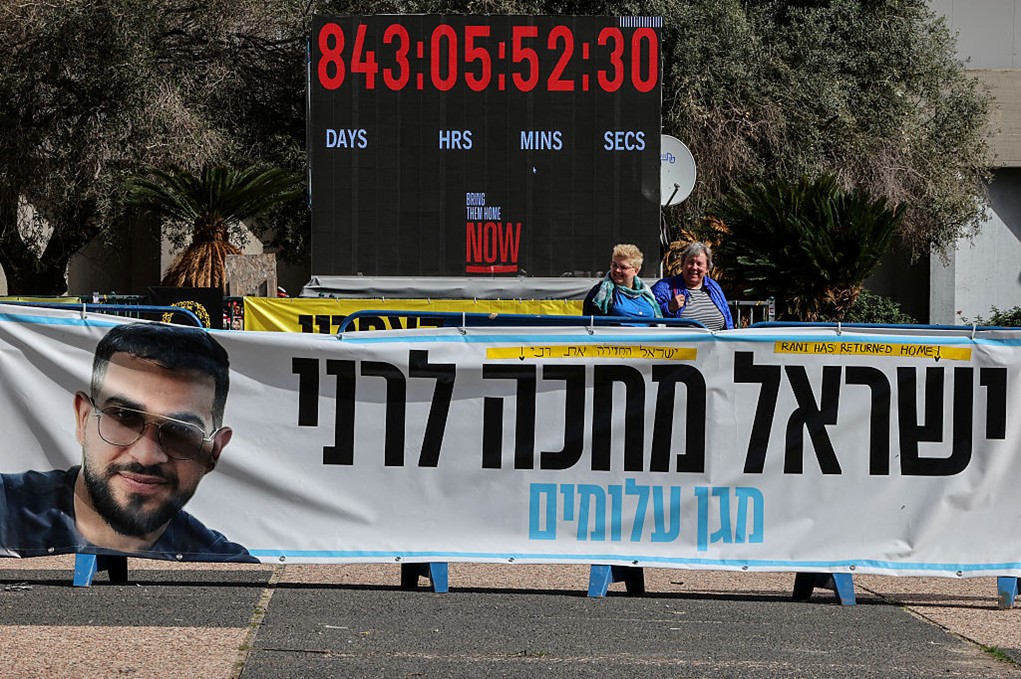 The body of Master Sgt. Ran Gvili, the last Israeli still unaccounted for after the Oct. 7 Hamas attack, was returned from Gaza, ending more than two years of waiting. Gvili, a 24-year-old police officer killed while defending Kibbutz Alumum, was brought home for burial 843 days after he was taken captive.
“The first to go, the last to leave,” his mother posted on Facebook. “Our hero.”
Israel is now expected to reopen the Rafah crossing, Gaza’s border with Egypt and its key outlet to the outside world, the next phase of the ceasefire.
A banner of Ran Gvili is seen at Hostage Square in Tel Aviv.
Photo by Jack Guez/AFP via Getty Images.
Get Social