Howard Rosenthal
Prof. Howard Rosenthal, a political scientist whose pioneering research confirmed quantitatively that Congress is more politically polarized than at any point since Reconstruction, died on July 28 at his home in San Francisco. He was 83.
“Professor Rosenthal was a trailblazing figure in political science, who collaborated with economists and drew on game theory and other formal methods to help define the modern subfield of political economy,” said Prof. Alan Patten, chairman of the politics department at Princeton, where Professor Rosenthal taught between stints at Carnegie Mellon University in Pittsburgh and New York University. “He was especially known for work measuring and analyzing political polarization, a phenomenon that is of more relevance than ever in contemporary American politics.”
Professor Rosenthal was awarded the Duncan Black Prize from the Public Choice Society in 1980, the C.Q. Press Award from the American Political Science Association in 1985, and the William H. Riker Prize for Political Science from the University of Rochester in 2010.
City of Highland Park, Ill.
The Shofar and the Shofar’s editor join the City of Highland Park, Ill., in mourning those killed in a mass shooting at a July 4 parade. Among them were Steve Strauss, 88, Jacki Lovi Sundheim, 63, and Katherine Goldstein, 64. Before relocating to New York, my husband and I and our children lived in that picturesque city, within walking distance of Ravinia Park, the summer home of the Chicago Symphony Orchestra. On nice afternoons, with Jenny in a stroller and Mimi on a tricycle, we would meander through the park and listen to Seiji Ozawa rehearse the orchestra. To learn that such a thing could happen there was shattering. SMB
David Weiss Halivni
David Weiss Halivni, a theologian and pioneer in the field of academic Talmudic scholarship, died June 29 in Israel, and was buried on Jerusalem’s Mount of Olives.
Born in today’s Ukraine, Halivni was raised in Sighet, Romania, by a Talmudic scholar grandfather, who fostered his evident genius with rabbinic texts. In Sighet, he studied alongside Elie Wiesel, who remained a close, lifelong friend.
Halivni was ordained as a rabbi at 15, but by age 16, he was captured by the Nazis and, like Wiesel, was sent to Auschwitz and a series of Nazi camps. He was the only member of his family to survive the Holocaust.
In the United States, he taught at JTS and Columbia and was also the longtime head of Kehilat Orach Eliezer (KOE) in Manhattan. He retired in 2005, moved to Israel, and taught at Hebrew University and Bar Ilan University well into his 90s. In 2008, Halivni was awarded the Israel Prize.
Richard Taruskin
Richard Taruskin, a musicologist and public intellectual whose scholarship and criticism upended conventional classical music history, died July 1 in Oakland, CA. He was 77.
An emeritus professor at the University of California, Berkeley7 and a specialist in Russian music, Mr. Tasruskin was the author of a number of groundbreaking musicological studies, including the six-volume Oxford History of Western Music.
Mr. Taruskin courted controversy in nearly everything he wrote. His most consequential flamethrowing was his campaign against “historically accurate” performances of early music. “To be the expressive medium of one’s own age is a far worthier aim than historical verisimilitude,” he wrote in The New York Times in 1990. “What is verisimilitude, after all, but correctness? And correctness is the paltriest of virtues. It is something to demand of students, not artists.”
Arnold Skolnick
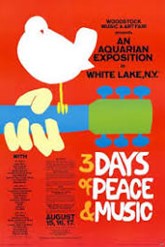 Arnold Skolnick, who designed what became the iconic pop-culture images of its time — the poster for the original Woodstock music festival in 1969 — died on June 15 in Amherst, MA. He was 85.
Mr. Skolnick’s poster design was a model of simplicity: it conveyed information and caught the sensibility of the moment. It had an attention-getting red background and the neck of a guitar with a white bird perched on it. “I got the assignment on a Thursday, and I brought it to them on Monday afternoon,” he told The Stamford Advocate in 2010.
Although best known for the poster, Mr. Skolnick also designed book and aa few film credit sequences, and worked in advertising. He also founded Imago Design, a design company that specialized in art books, and Chameleon Books, a publishing company for art books.
Not long after creating the Woodstock poster, Mr. Skolnick came up with another image seen by many: the cover for What to Do With Your Bad Car: An Action Manual for Lemon Owners. He told the Daily Hampshire Gazette, “I got a lemon. I put it on a Tonka toy truck. I put it on my kitchen table, and I shot it.”
Peter Brook
Peter Brook, whose creative stage work ranged across seven decades on both sides of the Atlantic and earned him a place among the greatest theater directors of the 20th century, died on July 2. He was 97.
He spent years in commercial theater, winning Tony Awards in 1966 and 1971 for “Marat/Sade” and Shakespeare’s “A Midsummer Night’s Dream.” He was equally at home directing Shaw, Beckett, Cocteau, Sartre and Chekhov. He “coaxed brilliance,” The New York Times said, from actors like Laurence Olivier, Vivien Leigh, John Gielgud, Paul Scofield, and Alfred Lunt and Lynn Fontanne. He staged more than 100 productions from his long and acclaimed career.
However, there was one art form whose rigidities he could not shatter. In 1947, Mr. Brooks was appointed director of productions at the Royal Opera House in London’s Covent Garden. His attempts to improve the quality of acting and décor upset some singers and critics, who thought the music had suffered. A production of Strauss’s “Salome” was the last straw. With designs by Salvador Dali, the staging featured gorgeously eccentric effects, but the management drew the line at a plan to divert the Thames and bring an ocean liner onstage. His contract was not renewed.
For Peter Brook, theater was “a whole mirror of human existence, visible and invisible, which should challenge both performers and audiences to reassess the world and their lives.”
James Caan
James Caan, who built a durable film career in varied roles across six decades but was forever identified most closely with one of his earliest characters, the quick-tempered Sonny Corleone in the original “Godfather” movie, died July 6. He was 82.
Prior to “The Godfather,” he had a role in “El Doraado,” a 1966 western, and “The Rain People,” a 1969 movie that was his first collaboration with the director Francis Ford Coppola. “Brian’s Song,” a made-for-television movie in 1971 brought him to the attention of a wider audience.
About “The Godfather,” he told Vanity Fair in 2004 that he won “Italian of the Year” twice, even though he was not Italian. He was Jewish. Made no difference he was so convincing as a mob guy.
He also turned to television., notably the series “Las Vegas,” in which he was seen from 2003 to 2007. Earlier, he appeared in “Dr. Kildare” and “Wagon Train.”
In “The Godfather,” he improvised some of his lines, including two words that he ushered into the vernacular. Sonny tells his brother Michael how hard it will be to kill the family’s enemies: “You gotta get up like this and — bada bing! — you blow their brains all over your nice Ivy League suit.”
Get Social