Robert Morse
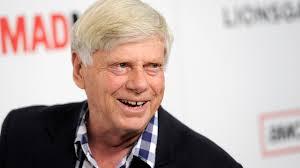 Robert Morse, whose impish, gap-toothed grin and expert comic timing made him a Tony-winning Broadway star as a charming corporate schemer in the 1961 musical “How to Succeed in Business Without Really Trying,” who later won another Tony for his portrait of the writer Truman Capote in “Tru,” and who capped his long career with a return to the corporate world on the television series “Mad Men,” died April 20 at his home in Los Angeles. He was 90.
“How to Succeed” ran for more than 1,400 performances and won seven Tony Awards, including for Mr. Morse as best actor in a musical, as well as the Pulitzer Prize for drama. A 1967 film adaptation with Mr. Morse was a hit as well, and the show has been revived twice on Broadway.
In 2007, he was cast as the eccentric head of an advertising agency in the acclaimed AMC series “Mad Men.” The role brought him five Emmy nominations. Although the role of Bertram Cooper was straight drama, Mr. Morse got to return to his musical comedy roots in the spring of 2014 when the character died and then reappeared in a fantasy song-and-dance sequence.
“What a send-off!” Mr. Morse said of the opportunity to shine in the spotlight. “It was an absolute love letter.”
Yeta Richter
The Shofar joins the membership in extending deepest condolences to Rochelle Garmise and the Garmise and Richter families on the death of Rochelle’s mother, Yeta Richter, on Feb. 27, at San Simeon by the Sound, in Greenport, NY. She was 103.
Leonard Kessler
 Leonard Kessler, the author and illustrator of hundreds of children’s book for early readers, died on Feb. 16 at his home in Sarasota, FL. He was 101.
Of the more than 300 books Mr. Kessler wrote and illustrated, perhaps the most popular is Mr. Pine’s Purple House, the story of how Mr. Pine set out to distinguish his white house from others on the block with purple paint. When it was published in 1965, it sold widely for 29 cents a copy. But by the mid 1990s, it had been out of print for decades and became a collector’s item, selling for $300 on eBay.
Mr. Kessler often found inspiration in the everyday. The hungry feelings of a small boy on a trip to the supermarket are magnified in Crunch Crunch, the sequel to Plink Plink, a book about feeling thirsty. The Big Red Bus, about a bus that lands in a pothole, snarling traffic, was chosen by The New York Times as one of the best illustrated children’s books of 1957. In 1990, it was a Times crossword clue (Big Red Bus author, 5 Down.)
About the color purple, Mr. Kessler told The Tampa Bay Times in 2005 that purple was his favorite color. “I have a purple door. I have a purple studio. I think purple is a color that vibrates. I think that’s me.”
Richard Blum
Richard C. Blum, a financier and major donor to Democrats — largely to his wife, Senator Dianne Feinstein of California — died March 27 at the family home in San Francisco. He was 86.
Mr. Blum ran his own investment firm, Blum Capital Partners, and during his career as an investment banker and financial manager, his clients included large institutions. With deep pockets, he became a major figure in Democratic politics. His net worth was estimated to exceed $1 billion.
He also held nonprofit positions; at one point he was chairman of the University of California Board of Regents. With the Dalai Lama among his influential friends, Mr. Blum developed an interest in South Asia as the home of Buddhist philosophy, as a recipient of philanthropy, and as a place for adventure. He once led an expedition up part of Mount Everest. In a statement of condolence, President Joe Biden called Mr. Blum “a successful businessman and proud son of California, who dedicated much of his public life to fighting poverty around the globe” through the establishment of the American Himalayan Foundation, a nonprofit group that builds schools and hospitals in Tibet, and the Blum Center for Developing Economies at the University of California, Berkeley, which focuses on innovative solutions to global poverty.
During Ms. Feinstein’s 1990 race to be California’s governor, Mr. Blum described to The New York Times what he called the triathlon of politics: “No. 1,” he said “we get to see on a regular basis everything she’s ever done and I’ve ever done distorted in the newspapers. No. 2, we get to share 17 years of our tax returns with 30 million people. And three, I get to pay to watch all this happen.”
Ken Duberstein
Ken Duberstein, a former White House chief of staff who helped resuscitate Ronald Reagan’s presidency and went on to become a successful lobbyist whose counsel was sought by leaders of both parties, died March 2 in Washington. He was 77.
Mr. Duberstein had joined the Reagan White House in 1981 as the president’s liaison to the House of Representatives, where he helped push through an extensive tax cut by getting conservative Democrats, known as blue dogs, to break with their party. His dogged ways earned him a nickname from Senator Howard Baker Jr., then the majority leader: Duberdog.
He later left the White House to work as a lobbyist, returned in 1987 to rescue the Reagan presidency, which was floundering in part because of public backlash over the Iran-contra scandal to use profits from the sale of weapons to Iran to supply Nicaraguan rebels. Reagan’s “mea culpa” speech, at the behest of Mr. Duberstein, helped turn the presidency around. In 1988, he was named chief of staff.
He was a trustee for the Kennedy Center for Performing Arts in Washington, and served on the boards of the Brookings Institution and the Council on Foreign Relations.
Rabbi Simeon Maslin
Simeon Maslin, 90, of Philadelphia, senior rabbi emeritus at Reform Congregation Keneseth Israel in Elkins Park, former president of the Central Conference of American Rabbis, and an influential author and speaker on Jewish life, died Jan. 29, at home.
As senior rabbi at Keneseth Israel from 1980 to 1997, Rabbi Maslink spoke often and wrote extensively about his faith and its collision with modern issues. A teacher and mentor to many in the United States, Australia, South Africa, Latin America, and elsewhere, he lectured about the importance of religious diversity in communities, the essential role of women in modern life, world peace, the separation of church and state, and other topics.
He called himself a “religious naturalist,” described God as a “guiding friend,” and published a number of books about leading a Jewish life. “The function of a Jew is to be cocreator, with God, of the world. The task of the human being is to perfect the world, using the tools God gives us,” he said.
Rabbi Chaim Kanievsky
Rabbi Chaim Kanievsky, a Talmudic scholar and a revered figure among the world’s ultra-Orthodox Jews, died March 18 in the Israeli city of Bnei Brak. He was 94.
Rabbi Kanievsky was known for his analytical prowess and knowledge when it came to the Torah and the dozens of volumes of the Babylonian and Jerusalem Talmud, which he studied year after year. Blessed with a photographic memory, he could recite entire passages.
Rabbi Kanievsky wrote and published dozens of volumes on Jewish law, often focusing on rituals and their ramifications for modern life. Jews regarded him as a modern-day prophet, and would flock to his modest apartment to seek his advice on questions both profound and personal.
Get Social